



Top 13 ServiceNow Alternatives in 2026

Table of Contents
ServiceNow continues to be a leading player in enterprise service management, holding a score of 4.3/5 and a 78% willingness to recommend rating on Gartner Peer Insights. However, at times, the platform may no longer align with certain enterprises due to factors like scale, licensing structure, or implementation complexity. That’s where organizations need to explore options that align better with their operations or budgets.
In 2026, the ServiceNow alternative landscape is broader than ever. As multiple platforms now offer considerable capabilities that overlap with ServiceNow across ITSM, automation, AIOps, employee workflows, integration ecosystems, and AI-driven operations. Thus, selection has become even more critical. Don’t worry, we’ve got you covered.
Through this blog, I’ll help decision-makers understand not just what the ServiceNow alternatives are, but why they qualify as true substitutes. So, without further ado, let’s begin!
Why do businesses look for ServiceNow alternatives?
Here are some of the points that shed light on the reasons besides licensing models why businesses consider alternatives to ServiceNow:
Matching the platform to business scale
Though ServiceNow excels in large, complex enterprise environments, but growing businesses or mid-sized teams sometimes want a platform that aligns more closely with their current size and workflow complexity. They may prefer something that delivers quick wins without requiring enterprise-level setup or governance. For instance, a newly launched start-up with only 50 employees may only require a structured incident management and a simple service catalog. So instead of deploying a full enterprise workflow platform, they would want to opt for a platform that suits their business needs and scale.
Choosing domain-focused solutions
Some organizations don’t need a unified, multi-department digital workflow platform. They look for tools built specifically for ITSM, HR workflows, or customer support, allowing them to optimize deeply for that single function. So, if a business wants to adopt a solution for HR case management that provides targeted HR workflows, onboarding, leave management, and policy updates, they wouldn’t be willing to adopt a broader enterprise suite like ServiceNow.
Needing faster, no-code configuration
Teams with lean IT resources may prefer a system where non-technical users can build forms, automate approvals, and update workflows through no-code builders. This helps them move faster and reduce dependency on specialized administrators.
Aligning with existing tech ecosystems
Organizations often adopt a workflow platform that fits neatly into the systems they already use, reducing integration work and centralizing data. The decision is driven by the desire for cohesion, not dissatisfaction with ServiceNow. For instance, if a company has already been using Salesforce, it would prefer choosing its subsequent clouds so that its CRM, automations, and case processes sit on a single platform, rather than switching to another platform.
Top ServiceNow alternatives in 2026

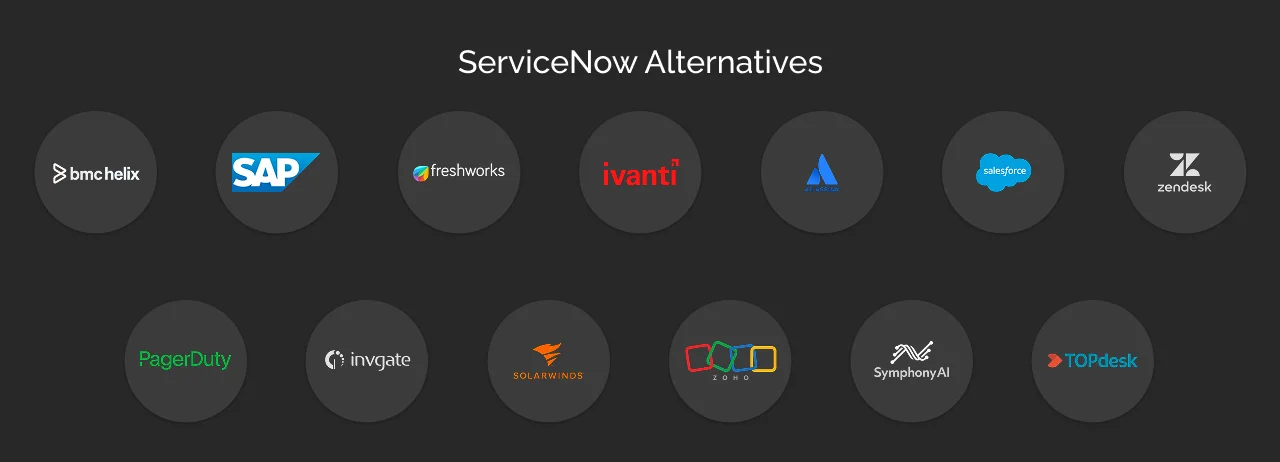
1. Atlassian
Atlassian is a collaboration-first SaaS ecosystem known for products like Jira, Confluence, and Opsgenie. It focuses on helping engineering, IT, and cross-functional teams plan, deliver, and support digital operations with flexibility and scale.
Overlapping products with ServiceNow:
- Jira Service Management
- Human Resource Service Management (HRSM)
- Customer Service Management
Jira Service Management (JSM): It is Atlassian’s ITSM platform built to unify IT, development, and business teams. What makes it stand out for me is its native connection with Jira Software, which simplifies cross-team workflows and accelerates incident resolution. It’s designed to be lightweight yet powerful, ideal for organizations that want modern ITSM without heavyweight enterprise complexity.
Human Resource Service Management (HRSM): Interestingly, HRSM also uses the JSM backbone to streamline HR operations, including onboarding, approvals, and employee request management. Instead of forcing HR teams into rigid templates, it allows HR workflows to be customized the same way product or IT workflows are.
Customer Service Management (CSM): Atlassian’s CSM extends Jira’s ticketing and workflow capabilities to customer-facing teams. I see it as a feasible option for businesses that already rely on Jira and want to unify support and engineering, ensuring customer issues are escalated and resolved quickly.
Dive deep into how ServiceNow’s offerings compare to Jira in our ‘Jira vs ServiceNow‘ blog.
2. Ivanti
Ivanti offers a unified ecosystem for IT service management, endpoint management, security operations, and enterprise workflows. The platform is designed for organizations managing large devices and distributed workforces, combining service, security, and asset intelligence in one stack.
Overlapping products with ServiceNow:
- IT Service Management (ITSM)
- IT Asset Management (ITAM)
- HR Service Management (HRSM)
- Governance, Risk & Compliance (GRC)
- Security Operations Management (SecOps)
- Facilities Service Management
- Project Portfolio Management (PPM)
Ivanti ITSM: Ivanti ITSM delivers end-to-end service management with strong automation, a codeless configuration engine, and deep alignment with device and endpoint data. I find it extremely effective when IT teams want enhanced visibility between services, assets, and security posture without building heavy custom frameworks. Its rated 4.3/5 as per Gartner Peer Insights.
Ivanti ITAM: Ivanti ITAM ties hardware, software, and endpoint insights into unified lifecycle management. It syncs directly with the device remotely, helping teams reduce shadow IT and manage distributed asset environments efficiently. Its rated 4.3/5 as per Gartner Peer Insights.
Ivanti HRSM: Ivanti HRSM helps HR teams automate onboarding, employee requests, and lifecycle workflows. I find it practical for companies that want HR services closely tied to IT provisioning and access management.
Ivanti GRC: Ivanti’s GRC enables governance, risk, and compliance automation across devices, processes, and service workflows. I see its strength in risk scoring tied directly to endpoint and service data, which creates a more accurate risk landscape.
Ivanti SecOps: Ivanti’s security operations management offerings integrate vulnerabilities, threats, and patch insights directly with service workflows, eventually leading to improved time-to-fix metrics and remediation processes.
Ivanti Facilities Service Management: This module supports facilities ticketing, maintenance, and workspace management. I find it a natural fit for companies wanting unified service operations across IT, HR, and facilities.
Ivanti PPM: Ivanti PPM helps teams manage IT projects, resource allocation, and portfolio visibility.
3. Freshworks
Freshworks SaaS offerings include customer relationship management, IT service management & e-commerce marketing software built for enhanced customer and employee experiences.
Overlapping products with ServiceNow:
- IT Service Management (ITSM)
- IT Operations Management (ITOM)
- IT Asset Management (ITAM)
- Freshdesk (Customer Service software)
- Enterprise Service Management (ESM)
- Freshsales (CRM for marketing & sales)
Freshservice ITSM: Freshservice brings intuitive IT service management with strong automation, a clean UI, and rapid configuration. I like how it simplifies complex workflows without sacrificing enterprise essentials. Its rated 4.3/5 as per Gartner Peer Insights.
Freshservice ITOM: It provides monitoring, alerting, and event correlation for hybrid environments. It’s simple but powerful enough for mid-sized organizations. Its rated 4.3/5 as per Gartner Peer Insights.
Freshservice ITAM: It brings hardware and software lifecycle management into a clean, unified view. I appreciate its simplicity and accurate CMDB population.
Dive deep into how ServiceNow’s offerings compare to Freshservice in our ‘ServiceNow vs Freshservice‘ blog.
4. Zendesk
Zendesk is a globally used customer support and employee service platform known for speed, omnichannel support, and operational simplicity.
Overlapping products with ServiceNow:
- Zendesk for Customer Service
- Zendesk for Employee Service
- Zendesk Platform
Zendesk Customer Service: Zendesk offers a mature omnichannel customer support experience with strong automations, macros, and self-service capabilities. I find it highly effective for customer-first teams that prioritize speed and consistency. Its rated 4.4/5 as per Gartner Peer Insights.
Zendesk Employee Service: This module extends Zendesk capabilities to internal teams such as HR, IT, legal, and operations. I like how quickly internal teams can adopt it without process-heavy setups.
5. Salesforce
Salesforce is a cloud ecosystem for CRM, service, field operations, analytics, data unification, and enterprise automation.
Overlapping products with ServiceNow:
- Service Cloud
- HR Service Management
- Field Service Management
- Sales Cloud and Order Management
- Net Zero Cloud
Salesforce Service Cloud: It delivers omnichannel service, automation, knowledge, AI assistance, and case management.
Salesforce HR Service Management: Further, along with HR Service Management, it supports employee lifecycle workflows. I find it extremely powerful when service teams want customer and employee operations on one platform.
Salesforce Field Service Management: It connects scheduling, dispatching, work orders, mobile workforce, and inventory. I like its flexibility and how it integrates with sales, service, and asset data.
Salesforce Sales Cloud & Order Management: These unify customer data, order lifecycle, revenue processes, and fulfillment. I like how it helps companies manage quote-to-order-to-fulfillment workflows without external orchestration.
6. Zoho
Zoho is a broad cloud ecosystem designed to streamline business operations across IT, HR, customer service, finance, and field operations. What makes Zoho unique is its integrated suite; everything from service management to HR to remote support sits inside a unified environment, allowing teams to scale without adopting multiple vendors.
Overlapping products with ServiceNow:
- ServiceDesk Plus (from Zoho’s ManageEngine division)
- Zoho Assist
- Zoho People (HR)
- Zoho Contracts (Legal)
- Zoho Desk (Helpdesk)
- Zoho Field Service Management (FSM)
ServiceDesk Plus: ServiceDesk Plus is Zoho’s enterprise ITSM platform, positioned as a practical alternative for organizations wanting strong ITIL-aligned IT processes without the complexity of ServiceNow. What I find compelling about this product is how efficiently it delivers core incident, problem, and change management. Its rated 4.4/5 as per Gartner Peer Insights.
Zoho Assist: It is Zoho’s remote support and remote access tool designed for IT teams providing end-user support. It takes seconds to initiate a remote session, and it’s an excellent choice for distributed teams or companies without dedicated remote support software. Its rated 4.6/5 as per Gartner Peer Insights.
Zoho People: Zoho People is an HR operations and service delivery platform built to streamline employee requests, onboarding, and HR workflows. I like that it balances core HRIS functions with HR service management, making it easy for HR teams to run cases, approvals, and documentation efficiently. Its rated 4.4/5 as per Gartner Peer Insights.
Zoho Desk: It is a multichannel customer service platform that helps support teams manage tickets, SLAs, and customer interactions across email, phone, chat, and social. It seamlessly gives teams a structured support experience while remaining easy to adapt for different industries. Its rated 4.5/5 as per Gartner Peer Insights.
Zoho Contracts: It helps legal teams manage contract creation, approvals, and negotiations with configurable workflows and clause libraries equivalent to ServiceNow Legal Service Delivery.
Zoho FSM: FSM supports field technicians with scheduling, routing, work order management, and customer communication. What I find useful is how both tools seamlessly plug into the Zoho ecosystem, removing friction between legal, operations, and customer-facing teams.
Dive deep into how ServiceNow’s offering compare to Zoho’s ManageEngine in our ‘ServiceNow vs ManageEngine’ blog.
7. BMC Helix
BMC Helix is an AI-powered service and operations management suite designed for enterprises that need deep automation, strong observability, and scalable ITSM and ESM capabilities.
Overlapping products with ServiceNow:
- IT Service Managment (ITSM)
- IT Operations Management (ITOM)
- Customer Service Management (CSM)
- HR Service Management (HRSM)
- SecOps
BMC Helix ITSM: It offers a full ITIL-aligned service management suite, designed to help enterprises modernize service delivery with automation. When I tried Helix ITSM, what stood out the most was its AI-driven incident prediction and automated resolution suggestions, features that significantly reduce manual ticket handling. Further, it also integrates Helix SecOps (security operations), enabling faster vulnerability remediation and incident response. Its rated 4.3/5 as per Gartner Peer Insights.
BMC Helix ITOM: It helps teams monitor infrastructure, applications, and service performance with real-time observability and automated remediation. The most impressive part is how ITOM ties directly into ITSM, giving you a unified view from root cause all the way to incident resolution. Its rated 4.8/5 as per Gartner Peer Insights.
BMC Helix CSM: It provides customer service management capabilities tailored for enterprises with complex support operations. Along with that, it rightly merges ITSM-grade workflows with customer-facing experiences, making it ideal for B2B support environments.
BMC Helix HRSM: It brings HR case management, knowledge sharing, and employee-facing workflow digitization into a single platform. Further, employee navigator gives employees guided self-service journeys. I like how both, HRSM & Employee Navigator together simplify common HR processes like onboarding, document handling, and policy requests.
Dive deep into how ServiceNow’s offerings compare to BMC Helix ITSM (formely remedy) in our ‘ServiceNow vs Remedy‘ blog.
8. SAP
SAP delivers enterprise-grade systems that unify finance, HR, procurement, supply chain, and asset operations. Its ecosystem is built for large organizations needing integrated workflows and deep process governance. Several SAP products overlap with ServiceNow’s service management, HR, asset, and compliance domains.
Overlapping products with ServiceNow:
- SAP S/4HANA (for managing assets)
- SAP Service and Asset Manager
- SAP SuccessFactors
- SAP Build Work Zone
- SAP Access Control and SAP Audit Management
SAP S/4HANA: SAP S/4HANA acts as the digital core for enterprise operations, connecting assets, maintenance, field operations, and financials. I find it best for organizations that want real-time insights tied directly to financial and operational outcomes.
SAP Service and Asset Manager: This product enables technicians and field teams to manage work orders, asset history, and inspections in real time. I see it used where field maintenance and SAP EAM are closely linked.
SAP SuccessFactors and SAP Build Work Zone: Together, these products offer a blend of HR service operations, employee workflows, and a unified digital workplace. I find them helpful for streamlining global HR processes.
SAP Access Control and SAP Audit Management: These products help enforce security, access governance, and automated audit trails. I find them used primarily in regulated enterprises that need strong SoD (segregation of duties) controls. This can easily be termed as a ServiceNow GRC alternative.
9. Invgate
InvGate is a modern, design-forward ITSM and ITAM platform built for organizations that want enterprise-grade capabilities without the cost or complexity of heavy platforms like ServiceNow. It also focuses on delivering structured ITIL-aligned processes, a clean UI, and fast deployment.
Overlapping products with ServiceNow:
- IT Service Management (ITSM)
- IT Asset Management (ITAM)
Invgate ITSM: InvGate offers a straightforward IT and enterprise service management experience with intuitive portals, workflow automation, and low deployment overhead. I find it ideal for teams that want structured processes without enterprise-level complexity.
Invgate ITAM: This tool helps track software, hardware, and inventories with automated discovery. I find it useful for organizations that want reliable ITAM without enterprise-grade complexity.
10. PagerDuty
PagerDuty is a real-time operations management platform built for always-on teams that rely on rapid incident response, automated alerting, and operational resilience. While it’s known for DevOps and engineering use cases, PagerDuty has evolved into a full digital operations suite that handles on-call scheduling, event intelligence, workflow automation, and service health monitoring.
Overlapping products with ServiceNow:
PagerDuty Operations Management: It centralizes alerts, coordinates on-call schedules, and accelerates incident response. It is critically used by SRE, DevOps, and platform teams where uptime is critical.
Dive deep into how ServiceNow’s offerings compare to PagerDuty in our ‘ServiceNow vs PagerDuty‘ blog.
11. SymphonyAI
SymphonyAI delivers AI-native ITSM and ITAM platforms focused on prediction, automation, and accelerated ticket resolution. I see it gaining traction among teams wanting AI-driven operations without complex configurations.
Overlapping products with ServiceNow:
- IT Service Management (ITSM)
- IT Asset Management (ITAM)
SymphonyAI ITSM: This platform uses AI to predict incidents, automate triage, and guide agents through smart recommendations. I find it effective for teams ready to adopt AI-first service operations.
SymphonyAI ITAM: This product focuses on AI-enhanced discovery, lifecycle automation, and cost optimization. I find it valuable for organizations wanting smarter license management.
12. SolarWinds
SolarWinds provides ITSM and IT operations tools to connect with infrastructure monitoring. It is most commonly adopted by IT teams wanting a blend of service management and operational insights.
Overlapping products with ServiceNow
- IT Service Management
- IT Asset Management
- Enterprise Service Management
Solar Winds ITSM: It enables incident, problem, change, and service request management with automation and built-in asset capabilities.
13. TOPdesk
TOPdesk is a long-established service management platform designed to unify IT, facilities, and enterprise services under one simple, process-light environment. Its CAFM-focused strengths (asset tracking, room reservations, planned maintenance, space management) make it a practical alternative for organizations where facilities, operations, and IT teams work closely together.
Overlapping products with ServiceNow:
- IT Service Management (ITSM)
- Facility Management
- Enterprise Service Management (ESM)
TOPdesk ITSM: It offers simple, intuitive incident, change, and request management. I see it used where ease of use is more important than deep ITIL complexity.
TOPdesk Facility Management: It supports room bookings, workplace reservations, maintenance, assets, supplier management, and service requests. I find it closely similar to ServiceNow Workplace Service Delivery.
TOPdesk ESM: It extends service delivery to HR, facilities, finance, and operations. I find it useful for organizations that want a shared portal without heavy workflow engineering.
Best Practices for Selecting ServiceNow Alternatives
Once you’ve explored the leading alternatives, the next step is to identify which one aligns most closely with your business needs. This isn’t about replacing ServiceNow feature-for-feature. It’s about choosing a platform that delivers the outcomes your teams care about the most. Here are a few considerations that you can keep in mind before selecting your alternative:
Map capabilities to your most critical workflows: Start by identifying the processes where the new platform must deliver immediate value. Every workflow tool has strengths, so match them to the areas that generate the most operational load for your business. For example, if your IT team manages a high volume of incidents and SLA-driven tickets, a platform that specializes in incident workflows delivers quicker gains than a broader ESM suite.
Assess integration quality with your existing tools: Nearly every platform claims to ‘integrate’, but the depth, reliability, and automation flexibility vary significantly.
Look beyond checkboxes, and ask questions like:
- Does the integration offer bi-directional sync?
- Does the integration offer real-time updates?
- Does the integration offer automation triggers?
- Does the integration offer only basic data exchange?
Evaluate ease of use: Even the best system fails if day-to-day users find it complicated to use. Focus on how quickly employees can find information, update tasks, especially during peak workload. For instance, a clean mobile UI can make a big difference for on-ground teams like field support, helping them respond faster without having to navigate through complex screens.


Final take
Choosing the right ServiceNow alternative isn’t about replacing one platform with another. Rather, it’s all about finding a tool that fits your workflows, your team, and your organization’s growth stage. Thus, with a clear understanding of your priorities, the alternatives in this list can help you move toward a more efficient platform.
At Cyntexa, we hold official partnerships with multiple cloud technology providers and can help you choose the best platform that aligns with your workflows & goals.
Book a consultation call today!
Don’t Worry, We Got You Covered!
Get The Expert curated eGuide straight to your inbox and get going with the Salesforce Excellence.
AUTHOR
Tanushri
Head of Growth And Strategy
Tanushri heads Growth and Strategy at Cyntexa, with over 6 years of experience in sales and marketing. She specializes in aligning go-to-market teams, scaling revenue operations, and building structured, tech-enabled growth plans. Tanushri also advises businesses on Salesforce, ServiceNow, AWS and Google Cloud adoption, ensuring each strategy is execution-ready, future-proof, and tailored to the organization’s maturity and growth goals.


Cyntexa.
Join Our Newsletter. Get Your Daily Dose Of Search Know-How